Europe's heat, fires and drought
Europe fights its fires with borrowed aircraft: a country that cannot cope asks the emergency response coordination centre in Brussels for help, other countries offer what they can spare, and the EU pays up to three quarters of the cost. The Union's own planes do not arrive until 2028, and the same heat is emptying the rivers the continent ships on.
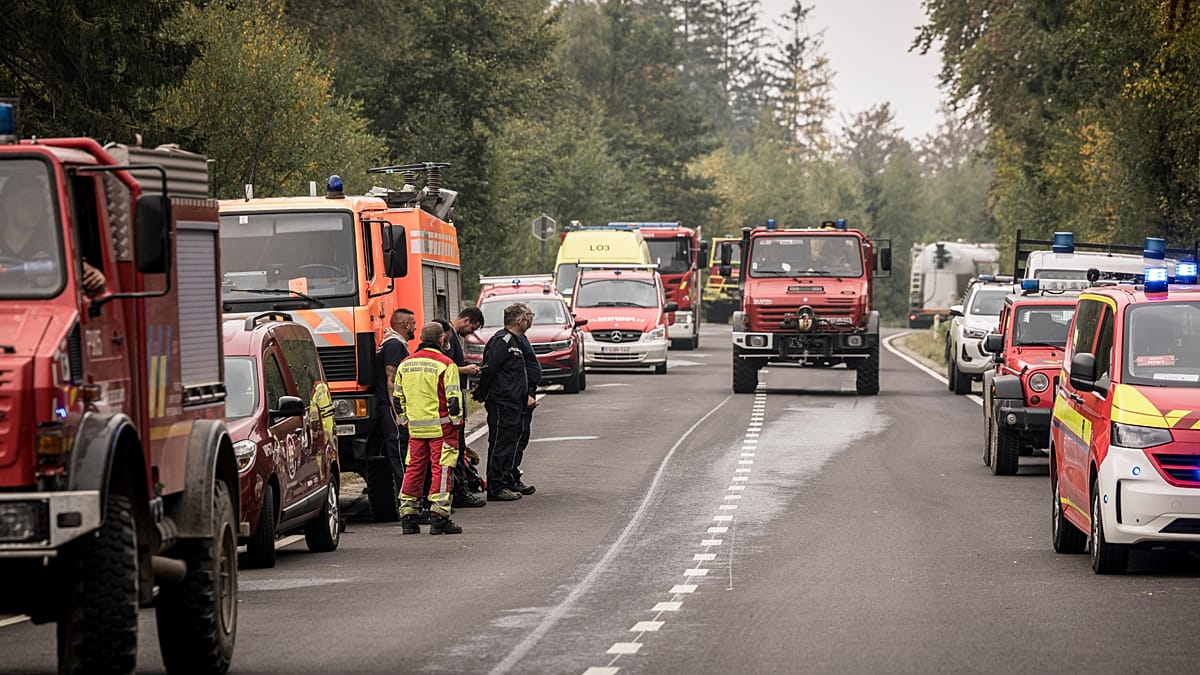
Europe treats extreme heat as a civil-protection problem. The machinery is the EU civil protection mechanism, which the Commission set up in October 2001 and which now covers 37 countries. A country that cannot cope alone asks the emergency response coordination centre in Brussels for help. The centre passes the request to every participant. Each offers what it can spare: aircraft, crews, vehicles, experts. The stricken country picks from the offers. The Commission coordinates delivery and pays part of the bill, and Copernicus satellites supply the maps.
In the last week of July 2026 the EU sent France 7 planes and 4 helicopters from seven countries, and Spain 6 planes and 134 personnel from Portugal. More than 300,000 people had fled their homes in the two countries. Three Greek firefighters died on 29 July, on Crete and in southern Greece. Spain that week raised a fire to operational level 3 for the first time in its history, moving command from the region to the national government. The emergency was stood down on 30 July.
Offers are voluntary, and the Commission's case for holding a reserve is that countries can help each other less when several face the same crisis at once. rescEU stood at 22 planes and 5 helicopters in 2026, and most of the aircraft that flew to France came from it. The reserve is not a separate air force: member states host the aircraft, and the Commission pays for their standby and 75 percent of the cost of operating them. The Union's own 12 planes are due from early 2028.
Europe is warming twice as fast as the global average, according to the Copernicus climate service. World Weather Attribution found that fire weather as extreme as central Spain's in July 2026 is now at least 20 times likelier than in a pre-industrial climate. France has burned more this year than in any completed year since the EFFIS records begin in 2006. A Commission policy paper published earlier in 2026 called for wider grazing, restored wetlands and floodplains, better fire data and a better informed public.
On 29 July 2026 the Danube entering Romania ran at under a third of its usual July flow, and in several countries it was the lowest in 30 years. Shipping stopped in Bulgaria, where border police took 186 passengers off a cruise ship aground near Vidin. At Paks, Hungary's only nuclear plant, the water fell below the cooling intakes, and Péter Magyar said on 30 July that it would shut down for the first time in 44 years. By 11 August only two of its eight turbines were running again.
”The [emergency] response is not only the answer. It’s the last answer. But it’s not all the answer. We need to focus on prevention.”
The numbers
What the comparison shows
Where they agree
Pedro Sánchez called Spain's first nationally led fire response a reasonable success, and asked for a national pact on the climate emergency. Hadja Lahbib called the July deployment the reason Europe built a common response capacity, and promised France and Spain more support until the fires were out.
Where they split
Moisés Galán, a wildfire expert at the Commission's own coordination centre, says putting fires out is the last resort and not the whole job, and that prevention is years of work out in the landscape. Vula Tsetsi of the European Green party locates the gap in Brussels instead: the Commission's heating and cooling plan was expected in April 2026 and had not appeared by the end of July. Pedro Sánchez wants a single pact covering response, prevention and reconstruction, which places him beside Galán rather than against him. The Commission's own account of July leads with what flew and who sent it.
What nobody is saying
What gets published is what was sent. The Commission's release of 27 July lists the aircraft that flew and the countries that sent them, and says nothing about any request that went unanswered. The decision that governs the mechanism sets three cost shares of 75 percent, and every one of them pays for a deployment; none pays for work done before a fire starts.
Who says what
Presents the July deployment as the common response capacity working as intended, and says more support is standing ready the moment France and Spain ask for it.
”Right now, hundreds of thousands of people have been forced to flee their homes, while firefighters battle walls of flame in dramatic conditions to save lives and communities. No country should ever have to face a disaster of this scale alone.”Right now, hundreds of thousands of people have been forced to flee their homes, while firefighters battle walls of flame in dramatic conditions to save lives and communities. No country should ever have to face a disaster of this scale alone.
Called Spain's first nationally led fire response a reasonable success and ended the national emergency on 30 July. Wants a broad national pact on the climate emergency covering response, prevention and reconstruction alike.
”Tenemos que estar unidos en la respuesta, pero tenemos que estar unidos también en la prevención y en la reconstrucción”We have to be united in the response, but we have to be united also in prevention and in reconstruction
Puts prevention ahead of suppression, and does so from inside the centre that dispatches the aircraft. The work will take many years, he says.
”The [emergency] response is not only the answer. It’s the last answer. But it’s not all the answer. We need to focus on prevention.”The [emergency] response is not only the answer. It’s the last answer. But it’s not all the answer. We need to focus on prevention.
The problem is not solidarity during the fire but the absence of European decisions between fires. The Commission's heating and cooling plan was expected in April 2026 and had still not appeared at the end of July.
”There is a widening gap between the scale of Europe’s heatwaves – literally hitting every EU country – and the absence of decisive European action.”There is a widening gap between the scale of Europe’s heatwaves – literally hitting every EU country – and the absence of decisive European action.
The drought is driven less by missing rain than by warmer air pulling moisture out; the 2026 drought arrived two months earlier than the one in 2022.
”That is our own doing: as temperatures climb, the atmosphere’s thirst increases quickly, sucking moisture out of rivers, lakes, reservoirs and the soil.”That is our own doing: as temperatures climb, the atmosphere’s thirst increases quickly, sucking moisture out of rivers, lakes, reservoirs and the soil.
Oversees river traffic on Bulgaria's stretch of the Danube, where shipping stopped altogether in late July 2026, and says nothing like these levels has been recorded there since 1990.
”I have never heard of such low levels over the years. There has certainly not been a similar situation since 1990”I have never heard of such low levels over the years. There has certainly not been a similar situation since 1990
Our coverage
- Climate change driving record heat in Europe's seas, study findsWednesday, 19 August 2026
- Belgium's largest recorded wildfire triggered the EU Civil Protection MechanismMonday, 17 August 2026
- A fresh heatwave over Europe, 42.5C in central FranceFriday, 14 August 2026
- The EU's burnt area is the fourth largest in fifteen years, and Spain is 38 percent of itFriday, 14 August 2026
- A fifth of France's nuclear capacity is offline, a recordThursday, 13 August 2026
- Drought declared across almost three quarters of EnglandWednesday, 12 August 2026
- Nearly 70 percent of France is under water-use restrictionsTuesday, 11 August 2026
- Western Europe has just had its hottest June and July on recordTuesday, 11 August 2026
- The Danube's drought threatens transport, food and energy across EuropeMonday, 10 August 2026
- Wildfire above Lake Garda forces 200 from homes and holiday letsSunday, 9 August 2026
- Drought forces Poland to cut coal output as the Vistula runs lowFriday, 7 August 2026
- Romania on energy alert: Dacia and Ford halt production as drought cripples power supplyWednesday, 5 August 2026
- Hungary's only nuclear plant close to shutdown as the Danube falls to record lowsMonday, 3 August 2026
- Hungary shuts down its only nuclear plant as the Danube hits record lowsSunday, 2 August 2026
- Record low Danube forces Hungary's only nuclear plant to shut downThursday, 30 July 2026
- Three Greek firefighters die as extreme heat hampers the fight against southern Europe's wildfiresWednesday, 29 July 2026
- EU sends planes and firefighters to France and Spain in one of Europe's largest evacuationsTuesday, 28 July 2026