Sudan's war: the supply chain that keeps it going
The UN arms embargo on Sudan covers only Darfur, while a UN fact-finding mission says the weapons, drones and foreign fighters that keep the Rapid Support Forces going arrive through Chad, Libya and Somalia.
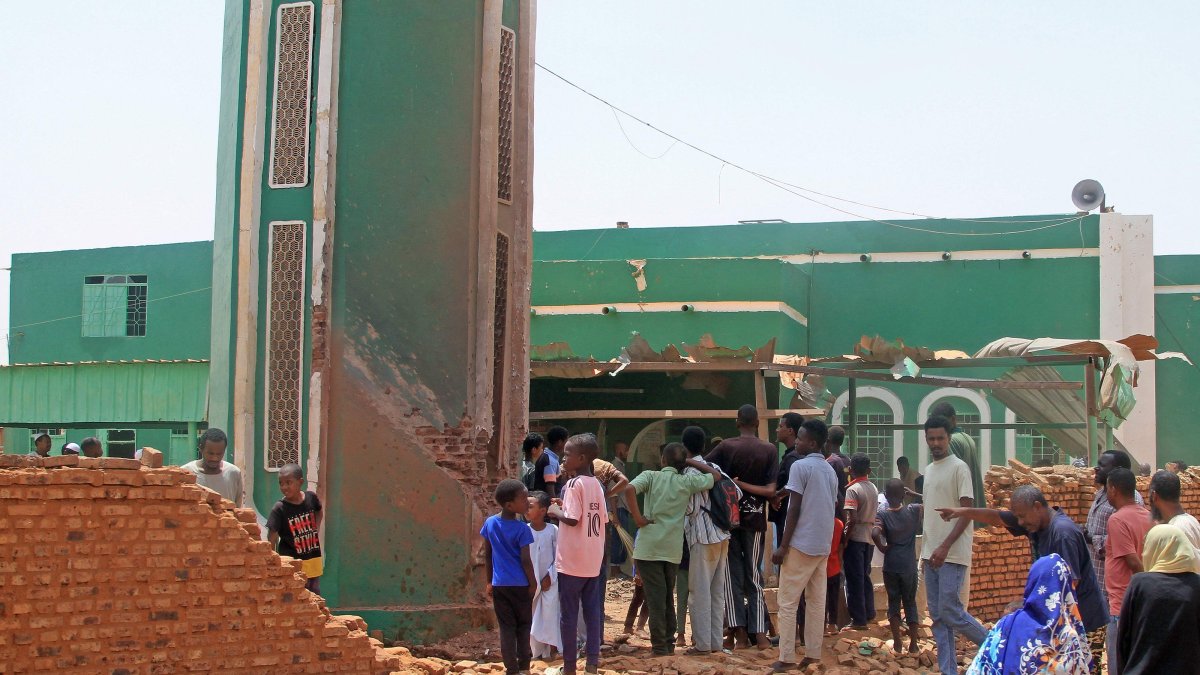
Sudan's army and the paramilitary Rapid Support Forces, or RSF, have been at war since 15 April 2023. The Associated Press reported in September 2026 that the fighting had killed at least 59,000 people and driven about 13 million from their homes. UNHCR counted more in April 2026, because it counted everyone who had fled at any point in the war: some 14 million, a quarter of the population. Of those, 9 million were still displaced inside Sudan and 4.4 million had crossed a border.
By 2026 both sides had drones that could strike far beyond the ground front lines. The UN human rights office documented more than 1,000 civilians killed in drone strikes between January and May 2026 alone. The UN fact-finding mission for Sudan recorded attacks on hospitals, schools, markets and displacement sites. In El-Obeid it says Rapid Support Forces drone attacks in June 2026 repeatedly hit the city's main electricity substation and its fuel stations, cutting the water supply and leaving hospitals short of generator fuel.
Those drones come from abroad. On 3 September 2026 the mission reported reasonable grounds to believe a transnational network supplied the Rapid Support Forces with weapons, logistics, training and foreign personnel. Private companies, intermediaries and recruiters working from Colombia, the United Arab Emirates and elsewhere moved people and cargo through Chad, southeastern Libya and Bosaso in Somalia. Its work on the army's suppliers is preliminary, but it already finds reasonable grounds to believe the army used foreign-supplied drones in attacks that struck civilian targets, including a market in Blue Nile.
Estimates of how many Colombians were recruited on contract ranged from 350 to 2,000, and the mission assessed the total may approach 2,000. It says they flew drones and served artillery alongside Rapid Support Forces units at Nyala and El-Fasher in Darfur. Fighters trained in Libya took part in the attacks on Zamzam camp in April 2025 and on El-Fasher in October 2025. The UN and African Union conventions on mercenaries bind only the states that joined them. Colombia told the mission it was moving to join the UN one.
The Security Council's arms embargo covers Darfur and nowhere else, a limit set by resolutions 1556 in 2004 and 1591 in 2005. The mission asked for it to cover the whole country. On 11 September 2026 the Council instead adopted resolution 2828, leaving the measures unchanged until 9 October 2026. The previous renewal, on 12 September 2025, ran a year. The United States drafted the short text and wants the month used to negotiate a wider embargo. Russia's delegate said Moscow would not allow even a hint of broadening.
”This external support has not brought greater protection for civilians. Instead, civilians are paying the price through attacks on homes, hospitals, schools, markets and places of refuge.”
The numbers
What the comparison shows
Where they agree
That private companies and individuals, not states alone, moved the fighters and the weapons. The mission makes no finding of state responsibility against Colombia, and Colombia told the mission it opposes its nationals fighting as mercenaries abroad.
Where they split
Whether the United Arab Emirates is part of the network. The mission found that individuals and entities operating from, registered in or linked to the Emirates played a significant role in networks that recruited, financed, transported and deployed foreign fighters for the Rapid Support Forces. The Emirates told the mission it had stayed neutral, supplied no arms and found nothing in its own investigations. The day after the Council renewed the embargo, the Emirates publicly asked for the widening the mission had called for, and for more: an embargo binding every party to the war, the Sudanese army included.
What nobody is saying
Who exported the weapons. The mission names equipment that reached the Rapid Support Forces, including NORINCO AH-4 howitzers, FK-2000 air-defence systems and CH-95 drones, and says some of it matched equipment previously exported to the United Arab Emirates. It names no exporting state, and it recommends that the Emirates investigate the companies and individuals it identified.
Who says what
Argues that protecting civilians now means acting against the individuals, companies and networks that keep the war supplied, not only against the two armies fighting it.
”This external support has not brought greater protection for civilians. Instead, civilians are paying the price through attacks on homes, hospitals, schools, markets and places of refuge.”This external support has not brought greater protection for civilians. Instead, civilians are paying the price through attacks on homes, hospitals, schools, markets and places of refuge.
Describes not one supplier but a chain of networks across several countries, delivering the foreign personnel, training, weapons and logistics together.
”This support fed into RSF operations in Zamzam camp and later during the takeover of El-Fasher, where the Mission documented grave human rights and international humanitarian law violations and international crimes, including conduct displaying hallmarks of genocide.”This support fed into RSF operations in Zamzam camp and later during the takeover of El-Fasher, where the Mission documented grave human rights and international humanitarian law violations and international crimes, including conduct displaying hallmarks of genocide.
Told the mission it had stayed neutral throughout the war, had supplied no arms or ammunition, and had neither recruited nor financed foreign fighters nor helped any reach Sudan. Its own inquiries, it said, found no link between companies under its jurisdiction and mercenary work or the men reportedly deployed in Sudan, and it called the allegations part of a false media campaign led by the Sudanese authorities in Port Sudan.
Our coverage
- UN fact-finding mission says foreign network armed and staffed Sudan's Rapid Support ForcesSaturday, 5 September 2026
- Chad accuses Sudan of deadly cross-border air strikeFriday, 28 August 2026
- More than 200,000 newly displaced as fighting rages in Sudan's Kordofan regionSunday, 23 August 2026
- Drone strike on a traditional court in North Darfur kills 35Sunday, 2 August 2026
- Child soldiers in Sudan describe Colombian mercenaries in the RSF's ranksThursday, 30 July 2026